
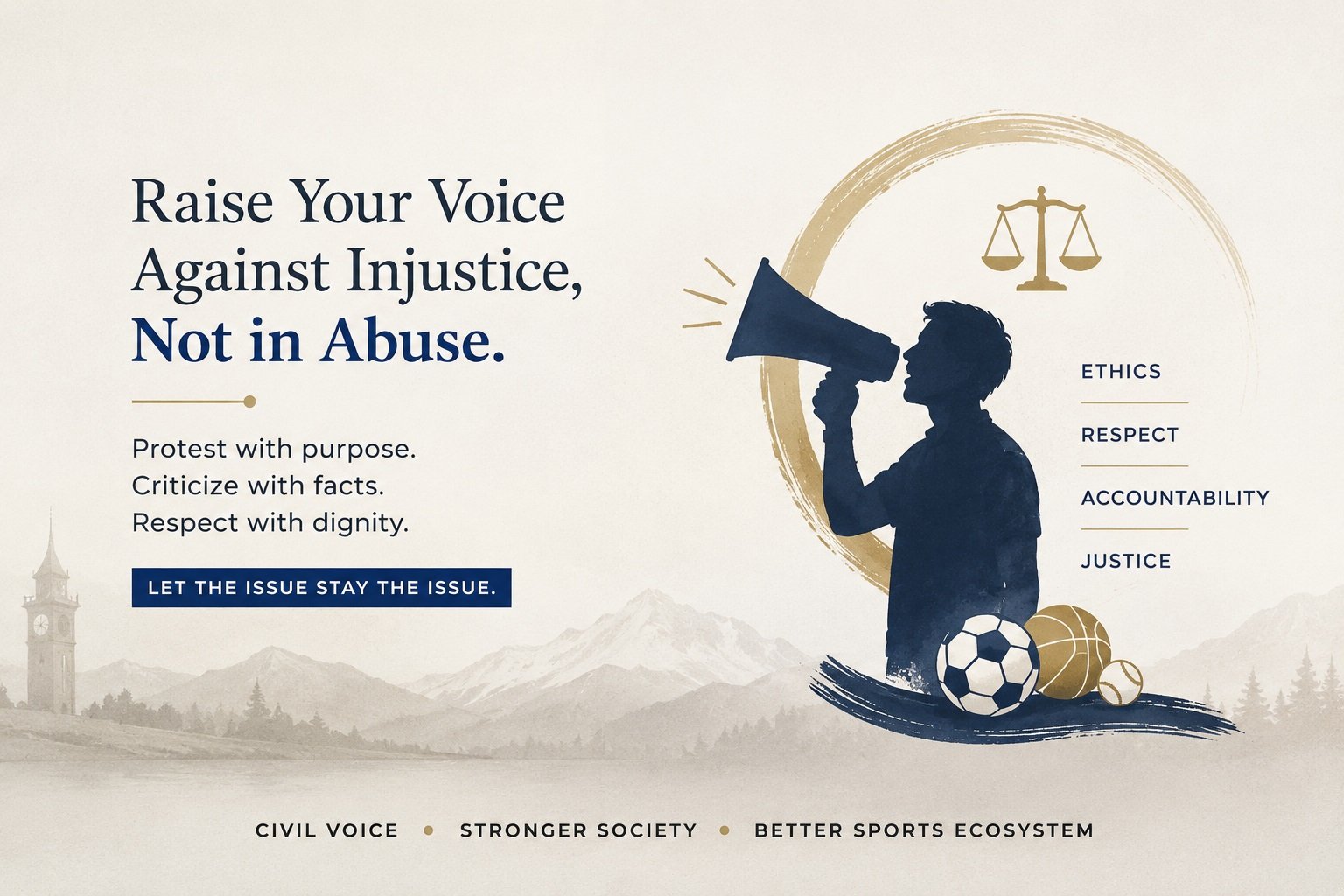

The ongoing debate surrounding the SO-12 Outstanding Sportspersons job list has become one of the most discussed issues in the sports fraternity of Jammu and Kashmir. Several sportspersons, particularly from Jammu, have raised concerns over the selection process and alleged irregularities. Every citizen has the constitutional and moral right to question decisions, seek transparency, and demand justice wherever they believe an injustice has occurred.
However, there is an equally important responsibility that accompanies this right.
While protesting against any perceived wrongdoing is justified, personal abuse, character assassination, and dragging the families of officials into the controversy cannot be accepted in a civil society. The focus must remain on the issue itself rather than descending into personal attacks that neither strengthen the movement nor serve the cause of justice.
There are established democratic ways to raise one’s voice. Allegations can be backed by evidence, administrative decisions can be questioned, legal remedies can be pursued, and public opinion can be mobilised through facts. Resorting to abusive language or targeting family members does not add credibility to any movement; instead, it weakens the very cause it seeks to advance.
I say this from personal experience.
Over the years, I have myself faced intimidation, pressure, and high-handedness from some of the very quarters against whom many sportspersons and political leaders are now raising their voices. As a journalist, I have reported extensively on issues affecting sports in Jammu and Kashmir. I have highlighted irregularities, questioned decisions, exposed controversies, and continued reporting despite facing hardships, police issues, and repeated attempts to silence uncomfortable questions.
Yet, I have never believed that abuse is journalism or that personal attacks constitute activism.
My responsibility has always been to report facts, expose wrongdoing wherever it exists, and hold authorities accountable—but always within the boundaries of ethics, professionalism, and decency. Criticism can be sharp without being abusive. Investigative reporting can be fearless without becoming personal.
Every individual has a family. Family members should never become collateral damage in disputes unless they themselves are directly involved in the matter under question. Even then, criticism must remain factual, evidence-based, and respectful. Abuse has no place in public discourse.
“Every individual has a family. Family members should never become collateral damage”
Democracy survives because people have the freedom to question authority. Equally, democracy demands that this freedom be exercised responsibly. Strong protests and sustained campaigns often achieve results, but only when they retain public sympathy and moral legitimacy.
The SO-12 controversy deserves a thorough and transparent examination. If mistakes have been committed, they should be corrected. If irregularities exist, they should be investigated. Those responsible must be held accountable through due process. These objectives are best served through facts, documentation, legal recourse, and principled advocacy—not through personal insults or attacks on the families of public officials.
As someone who has consistently opposed wrongdoing in sports administration, I cannot support methods that compromise the ethical foundations of legitimate protest. Accountability should never come at the cost of humanity.
I sincerely hope those leading the protests continue pursuing justice with determination while ensuring that the movement remains focused on the issue itself. Let the debate be firm, evidence-based, and relentless—but let it also remain civil, dignified, and worthy of the cause it seeks to represent.
— Abid Khan
Editor, Kashmir Sports Watch Magazine