

Srinagar: Barely days after the Supreme Court paved the way for the elected body of the Jammu & Kashmir Cricket Association (JKCA) to formally take charge, a fresh controversy has erupted that has reignited concerns over external influence and the autonomy of the association.
In a significant development, JKCA President Javid Kitab secured a court stay on an Apex Council meeting that had been called by the newly elected Secretary. The meeting, according to the petition filed before the court, was convened without the President’s consent, with inadequate notice, and in alleged violation of constitutional procedures governing the association.
The court subsequently stayed the meeting until the next date of hearing.
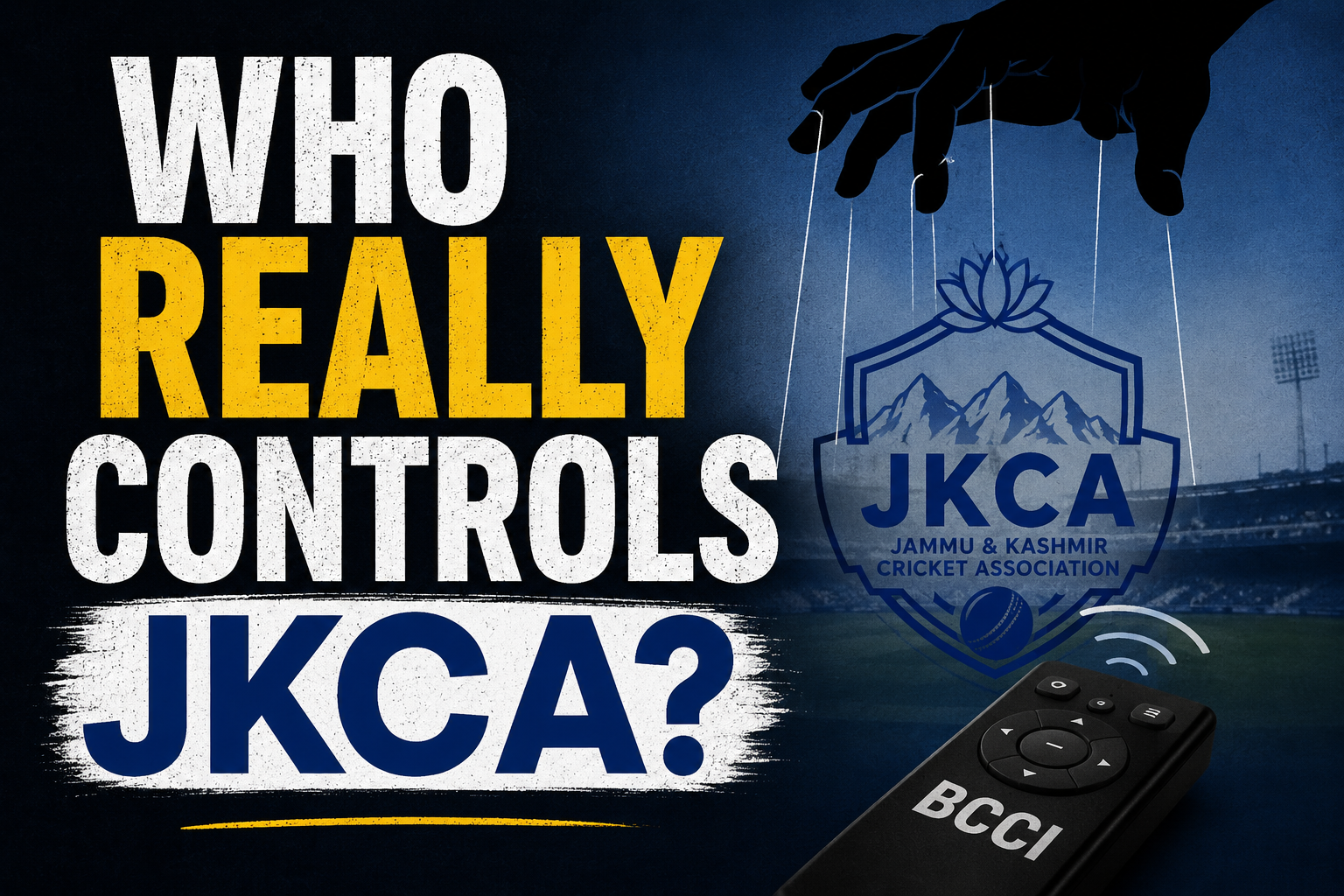
However, beyond the legal dispute lies a much bigger question now being openly discussed in cricketing circles: Is there an attempt to remotely control JKCA despite the return of democratic governance?
Return of Elections, Return of Interference?
The Supreme Court’s decision to clear the path for the elected body was widely viewed as the end of more than a decade of uncertainty, administrator-led governance and external oversight in JKCA.
For many stakeholders, the expectation was simple — allow the elected representatives to govern the association independently and in accordance with its constitution.
Instead, the first major controversy after the elections revolves around an emergency meeting that sought to take key decisions relating to appointments, administrative authority and financial powers.
According to sources familiar with the developments, the proposed agenda included discussions on appointing a Chief Executive Officer (CEO), General Manager (GM) and determining the disbursing powers within the association.
Critics allege that the haste with which the meeting was called points towards an attempt to push through decisions before the newly elected leadership could fully consolidate its authority.
Allegations of “Remote Control”
Several former cricketers and stakeholders have alleged that a powerful figure within the BCCI establishment continues to exercise influence over certain individuals within JKCA and is attempting to retain operational control despite the elections.
While no official evidence has been produced publicly to substantiate the claims, the perception itself is becoming a major talking point within the cricket community.
“The entire purpose of holding elections was to restore democratic governance. If major decisions continue to be dictated by individuals sitting outside J&K, then what exactly has changed?” asked a former player.
Another stakeholder described the situation as an alleged attempt to “remote control JKCA from a BCCI office rather than allowing elected representatives to function independently.”
“The elected body must be respected. If every major decision has to be approved elsewhere, then the spirit of the elections stands defeated,” he said.
Battle Over Key Appointments
The controversy has become even more sensitive because of reports that individuals associated with the previous administrative setup could be considered for key positions such as CEO and General Manager.
Former cricketers argue that any move to bring back officials associated with the administrator-led era would send the wrong signal to clubs, players and stakeholders who voted for change.
“It would amount to replacing elected governance with the same administrative structure through the back door,” said a former cricketer.
“The message would be that elections happened, but power never really changed hands.”
Critics also argue that any appointments linked to individuals who played roles during the electoral process could potentially invite scrutiny regarding conflict-of-interest concerns.
A Defining Test for JKCA
The controversy represents the first major challenge for the newly elected JKCA administration and may ultimately determine whether the association can function independently after years of external control.
For many within Jammu & Kashmir cricket, the issue is no longer merely about one meeting or a set of appointments.
It is about whether JKCA will be governed by the mandate of its elected representatives or continue to face influence from outside power centres.
The court’s stay has temporarily halted the proposed meeting, but the larger debate has only intensified.
As legal proceedings continue, stakeholders across the cricket fraternity will be closely watching whether JKCA’s long-awaited return to democracy translates into genuine autonomy—or whether allegations of “remote control” continue to cast a shadow over the association’s future.