
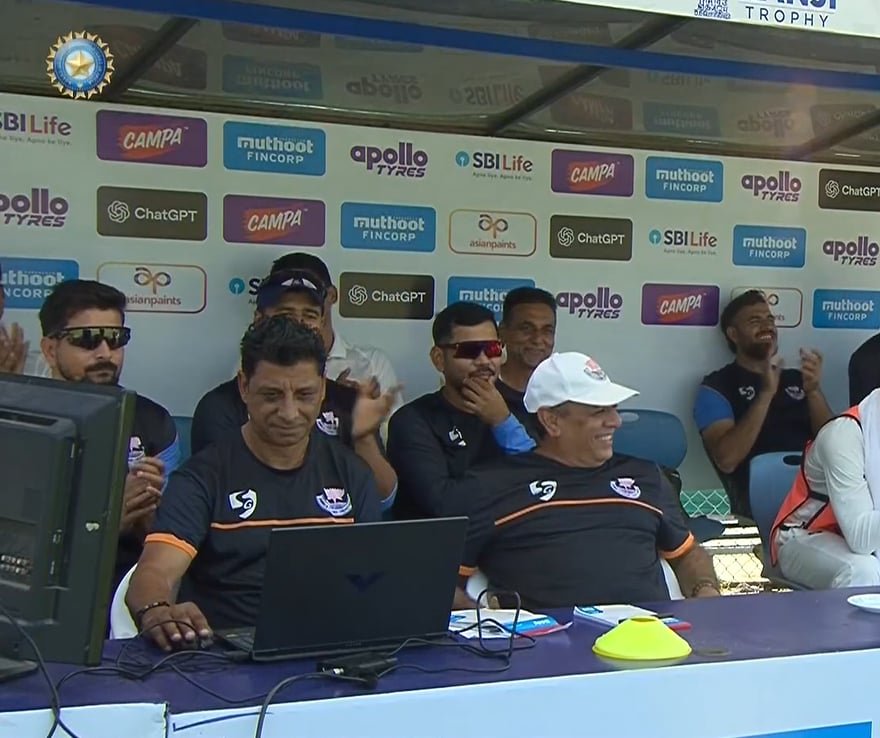

Jammu and Kashmir’s start to the Ranji Trophy season has been far from convincing. After losing to Vidarbha and being rescued by rain against Madhya Pradesh, J&K now face an uphill task against Baroda, with their latest performance exposing concerns that go beyond individual player failures.
One of the biggest concerns has been the apparent gap in planning and execution between the two sides.
Baroda appeared to have specific plans for individual J&K batters, while J&K’s bowling often lacked the same visible tactical precision. Shubham Khajuria, for instance, was repeatedly tested in the fifth- and sixth-stump channel, targeting an area where he has previously struggled. The plan eventually paid off.
When Paras Dogra came to the crease, Baroda turned to a barrage of short-pitched deliveries, testing a recognised weakness in his game. These examples highlighted the difference that targeted preparation and execution can make at the first-class level.
There were concerns at the other end, too. J&K did not consistently use pace in the opening period, while Baroda’s seamers maintained pressure with quicker bowling and secured breakthroughs. The contrast raised questions about whether J&K had a clear, adaptable bowling strategy for the conditions.
Questions over the coaching setup
These performances have put J&K’s coaching staff under scrutiny. The concern is not simply that the team has lost matches, but whether its tactical preparation, in-game adjustments and decision-making have been good enough.
The composition of the coaching setup also deserves examination. Some members of the staff previously worked with J&K’s Under-23 team before moving into the senior setup. Their appointments are not, in themselves, evidence of a problem, but the team’s early-season struggles make it reasonable to ask what criteria guided those decisions and what impact the staff has had on senior-team performances.
J&K won the Ranji Trophy last season, but that achievement cannot shield the coaching setup from scrutiny when results and performances deteriorate. Nor should every setback automatically be blamed on the coaches. The responsibility is shared by players, selectors and team management.
However, when opponents appear better prepared to exploit individual weaknesses, the question becomes unavoidable: where is J&K’s tactical planning, and what is the coaching staff doing to address these shortcomings?
The season is still young, but J&K need more than individual brilliance or favourable conditions to turn things around. They need clearer plans, better execution and a coaching setup that can translate preparation into performances on the field.