
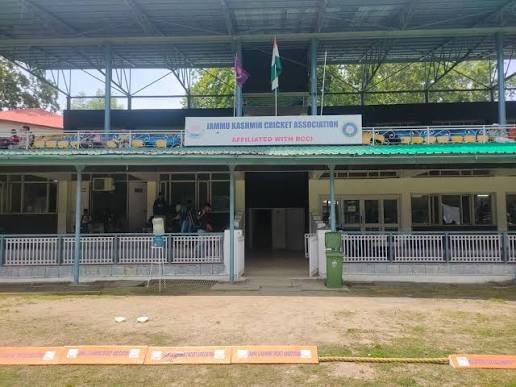

Srinagar: The Jammu and Kashmir Cricket Association (JKCA) has, in recent weeks, seen a change in who signs some of its official cricketing orders, with the Association’s Chief Executive Officer (CEO) signing communications relating to cricketing matters, including team lists and instructions.
The change, according to documents seen by KSW, has been noticeable since September. Earlier, similar communications were being issued under the signature of the Honorary Secretary. The development assumes significance because the JKCA Constitution, adopted on November 15, 2025, sets out separate responsibilities for the Secretary, Apex Council and CEO.
Under Rule 28(a), the Constitution provides that the day-to-day management of non-cricketing matters, including operations, technical, human resources, finance and media, shall be conducted by the CEO under the supervision of the Apex Council.
At the same time, Rule 15(c)(vii) provides for the Secretary to exercise powers in cricketing and non-cricketing matters with the respective management personnel, including the CEO reporting to the Secretary on a regular basis. More significantly, Rule 15(c)(viii) states that the management personnel, staff and CEO shall work under the “direct supervision, control and direction” of the Secretary.
The Constitution does give the CEO a defined set of functions under Rule 32, including specific authority under Rule 32(q) to sign and enter into contracts for and on behalf of JKCA. However, the Constitution’s provisions relating to the CEO do not, on their face, expressly state that the CEO has a general authority to sign cricketing orders such as team lists, cricketing instructions or other directions relating to cricketing operations.
That has raised a question within the association: what specific constitutional provision or delegation authorises the CEO to sign such cricketing communications? A former JKCA official, speaking on condition of anonymity, questioned the emerging practice.
“Have you ever seen CEO of any state association or BCCI signing cricketing orders? What’s the job of a secretary then?”
The official’s observation is a view on the governance arrangement and is not, by itself, evidence that the CEO lacks authority to sign the documents.
The constitutional question is further complicated by Rule 23, which deals with the Apex Council’s governance and oversight functions. The provision envisages a distribution and balance of authority and provides for the Apex Council to exercise superintendence over the CEO and other bodies through the Secretary.
The issue is therefore not simply who has physically signed an order, but whether the CEO is exercising a power expressly provided by the Constitution, a power arising from the CEO’s broader management responsibilities, or a function specifically delegated or authorised by the Apex Council.
JKCA has also been through a prolonged dispute over the authority behind official communications this year. In June, a JKCA Special General Meeting declared orders, notifications and communications issued by the Honorary Secretary after May 21 to be “null and void”, a position that formed part of the wider dispute over the association’s leadership and constitutional functioning.
The BCCI’s electoral proceedings have separately dealt with questions surrounding the constitution and validity of the JKCA Apex Council constituted through communications issued in May, highlighting the importance of establishing the constitutional source of authority behind decisions and communications within the association.
The latest development comes at a particularly important time for J&K cricket. JKCA on September 21 issued instructions for a preparatory camp ahead of the Irani Trophy, with the Senior Men’s Selection Committee asked to submit the final team to the Cricket Operations Section by September 26.
Another former JKCA official also questioned the continuity of the administrative setup.
“The current CEO was part of earlier sub-committee. Does it mean the same committee is handling affairs even now when we have an elected association?”
That assertion, however, requires a distinction. The fact that an individual may have served on an earlier committee does not by itself establish that the same committee continues to exercise authority after the elected association took charge. The relevant question is whether the present administration has formally retained, reconstituted or delegated any such powers.
The central issue, therefore, is whether the current CEO’s signing of cricketing orders represents routine implementation of powers lawfully vested or delegated to the CEO, or whether the practice has expanded beyond the functions specifically assigned to the CEO under the 2025 Constitution.
KSW has sought clarification from JKCA on the constitutional provision under which the CEO is signing cricketing orders and communications, whether the Apex Council has authorised such a practice, and whether any formal delegation exists.
JKCA’s response will be incorporated if and when received.