
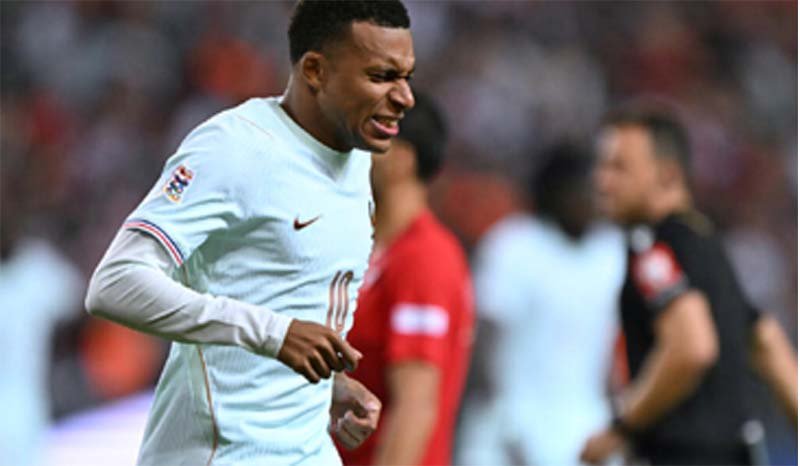

SHANGHAI, October 28: Real Madrid star Kylian Mbappe has faced a swift commercial and reputational backlash in China after making controversial remarks about former Chinese leader Mao Zedong, highlighting the risks international celebrities and global brands face when they cross the country’s political and cultural sensitivities.
The France captain came under fire after a podcast clip circulated in which he referred to Mao as “some guy” and described him as a Chinese dictator. The comments prompted a rapid response from major Chinese sponsors, with Mengniu Dairy, Shanghai Milkground and energy drink maker Eastroc terminating their partnerships with the footballer.
China’s state broadcaster CCTV also removed advertisements featuring Mbappe, while social media platforms restricted access to his accounts. The footballer subsequently apologised on Tuesday, acknowledging that his remarks had been “ill-judged”.
The speed and scale of the reaction have once again highlighted the challenges faced by foreign celebrities and businesses operating in China, where political sensitivities, public opinion and commercial interests can become closely intertwined.
A Familiar Pattern of Corporate Backlash
Mbappe’s predicament is the latest in a series of controversies involving international brands and public figures whose remarks or actions have triggered strong reactions in China.
Luxury fashion house Dolce & Gabbana faced a major backlash in 2018, forcing the cancellation of a planned fashion show in Shanghai. The following year, Versace, Dior and Coach issued apologies over products that were perceived as misrepresenting China’s territorial claims.
International sportswear brands, including H&M, Nike and Adidas, also faced boycotts over concerns surrounding cotton sourced from Xinjiang. The National Basketball Association encountered a separate dispute after a Houston Rockets executive expressed support for Hong Kong’s pro-democracy movement, prompting Chinese broadcaster CCTV to suspend its NBA coverage.
Although the circumstances surrounding these incidents have varied, the consequences have often followed a similar trajectory: a controversial statement or image spreads online, public pressure mounts, commercial partners face demands to respond, and the resulting damage extends well beyond the original controversy.
Michael MacRitchie, founder of MGI Group, which connects international celebrities with Chinese brands, said understanding local cultural expectations is essential for anyone seeking commercial success in the country.
He argued that foreign personalities do not necessarily need to adopt Chinese perspectives, but they must understand how local audiences may interpret their words and recognise the cultural consequences of failing to exercise caution.
The Fine Line Between Public Anger and Official Pressure
The Mbappe controversy has also raised questions about the forces shaping public reactions in China, where state media, online platforms and official messaging can play influential roles in amplifying sensitive issues.
Determining how much of the backlash reflects spontaneous public anger and how much is reinforced by institutional responses can be difficult.
In Mbappe’s case, the original podcast remarks were largely inaccessible on China’s heavily censored internet as the controversy developed. As a result, many users encountered the episode through reports about the sponsors ending their partnerships and official media criticism, rather than through the original comments themselves.
This sequence illustrates how rapidly a controversy can develop into a commercial crisis, particularly when political symbolism and national identity are involved.
For international brands, the challenge extends beyond avoiding offensive statements. Companies must also assess the potential consequences of their partnerships, the sensitivities of local consumers and the speed at which online criticism can escalate.
A Continuing Challenge for International Businesses
China remains a major market for global companies, athletes and entertainment personalities. However, repeated controversies have demonstrated how quickly commercial relationships can be affected when public figures are perceived to have crossed sensitive political or cultural boundaries.
For sponsors, the Mbappe episode underscores the reputational risks of associating with internationally recognised personalities whose public comments can generate controversy in key markets.
For celebrities, it serves as a reminder that statements made in one setting can have consequences far beyond their original audience, particularly when they concern politically significant figures or issues in countries where they have major commercial interests.
The episode reinforces a difficult reality for international businesses: maintaining a presence in China requires not only commercial appeal but also a careful understanding of the country’s cultural and political environment.