
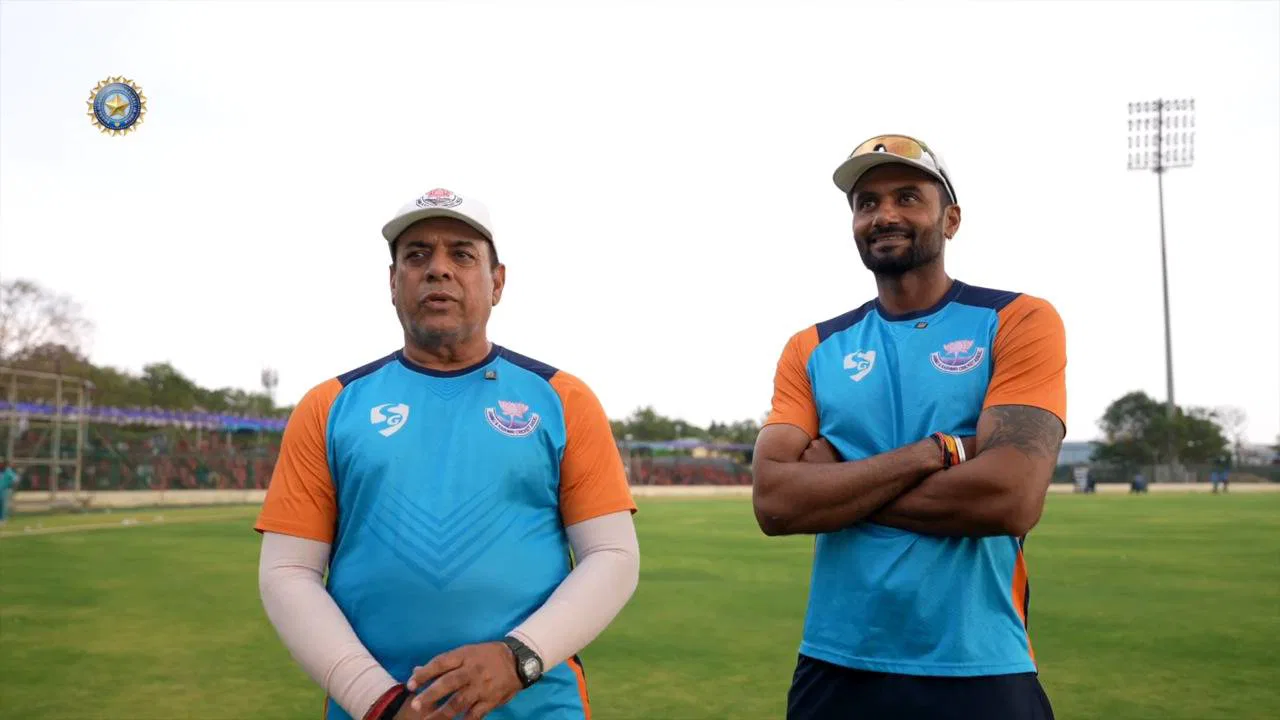

J&K’s historic Ranji Trophy triumph last season brought deserved credit to head coach Ajay Sharma. But persistent batting failures raise questions about whether the team has made enough progress in the department he was also appointed to improve.
Sharma, a former Delhi batter with an extensive domestic career, has helped J&K reach the pinnacle of Indian domestic cricket. Yet, the team’s batting continues to be a concern, with the ongoing season once again highlighting its struggles for consistency.
While J&K’s bowlers played a decisive role in last season’s title-winning campaign, the batting unit has not shown the same reliability. For a team looking to build on its historic achievement, the ability to post competitive totals and recover from difficult situations remains crucial.
Sharma’s coaching methods were a source of friction during his first season with J&K. In an interview with The New Indian Express in August 2025, he said players had complained about his approach to the JKCA sub-committee, with almost the entire squad signing the letter.
Sharma also said that, when he sought written feedback after the season, almost all the responses were critical, with some players describing him as a “dictator”. In a separate interview with The Times of India in February 2026, he said 13 players had written that they did not like being coached by him.
Sharma acknowledged that he subsequently changed his approach, communicating more with players, trying to understand their concerns and introducing his methods gradually. J&K’s Ranji Trophy triumph demonstrated that the team could succeed under his leadership despite the difficult start.
However, winning the title does not necessarily mean every department improved equally. The bowling unit’s contribution was decisive, while questions about the batting have persisted.
Is the approach delivering for J&K’s batters?
A strict coaching environment can improve discipline and raise standards, but its effectiveness must ultimately be judged by results and player development. The question is not whether Sharma’s methods are demanding, but whether they are helping batters make better decisions, handle pressure and produce consistent performances.
Are players converting starts into substantial scores? Are recurring collapses exposing technical or tactical weaknesses? And has the batting unit made measurable progress under a coach whose responsibilities include that department?
These questions require an assessment of performances across matches, rather than attributing every failure to the coach alone. But continued batting struggles make scrutiny of the coaching setup legitimate.
Sharma’s credentials as a former batter do not guarantee success as a batting coach, just as a title-winning season does not erase the need to address persistent weaknesses.
J&K have already proved they can win the Ranji Trophy. The next challenge is to build a batting unit capable of consistently supporting that success.
The real test of Sharma’s tenure is not just the trophy J&K won, but whether its batters are becoming more consistent, resilient and productive. On that front, questions remain.