


Srinagar: Imagine being the Chief Minister of a politically sensitive place like Jammu and Kashmir, with a demanding schedule, endless administrative responsibilities and political challenges competing for your attention. Now imagine finding time to train for half-marathons, participate in competitive running events and, at 56, continue improving your personal bests.
That was the question I wanted to ask Omar Abdullah. I did try to put it to him, but, perhaps unsurprisingly given his packed schedule and the political developments that constantly demand his attention, I never got an answer.
Yet, away from the political chair and the drama that surrounds it, there is one contribution for which I believe Omar deserves credit: his role in inspiring Kashmir’s growing running and fitness community.
It is not often that a sitting Chief Minister steps away from the usual world of political engagements to lace up his running shoes and compete in a major sporting event. In doing so, Omar has helped bring something different to Kashmir’s public life. He has demonstrated that fitness need not be confined to professional athletes, young sports enthusiasts or people with plenty of free time. It can be part of everyday life, regardless of age, profession or position.
And sometimes, seeing someone do something is far more powerful than hearing them speak about it.
When a Chief Minister takes to the road
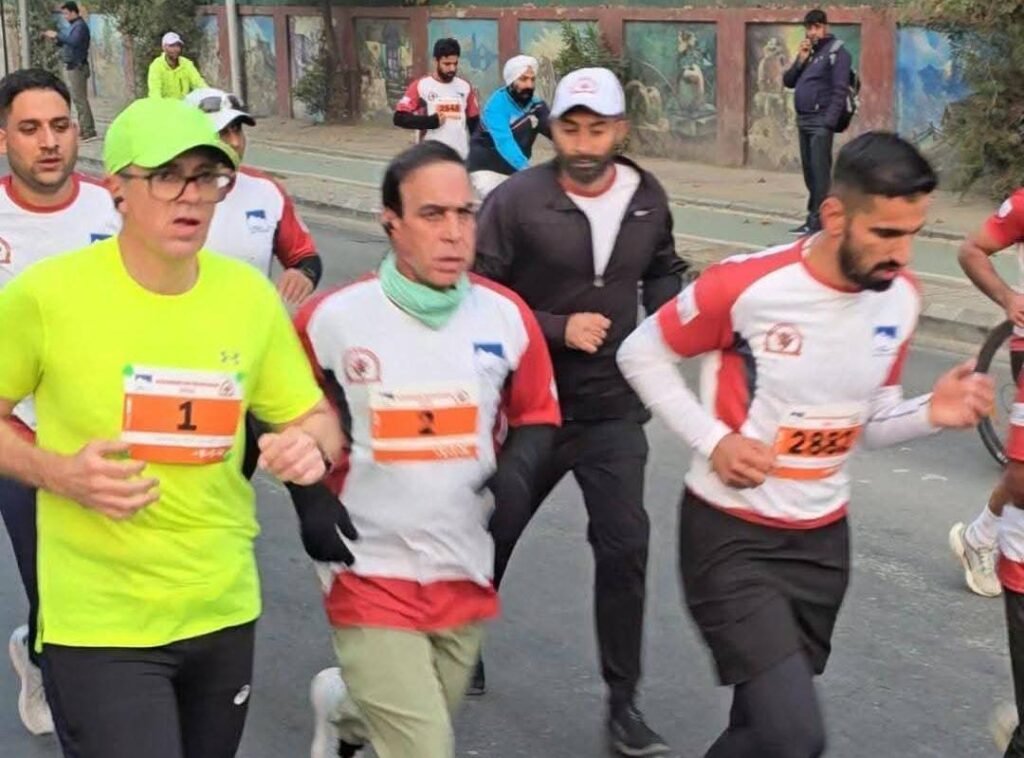
Omar Abdullah’s participation in the Kashmir Marathon has given the event a visibility that is difficult to achieve through conventional publicity alone. His appearance in the half-marathon was not merely a ceremonial gesture. He took on the 21-kilometre distance himself, putting his own endurance and preparation to the test.
During the 2024 Kashmir Half Marathon, he completed the distance in 2 hours and 6 minutes. A year later, at the 2025 edition, he finished in 1 hour, 51 minutes and 55 seconds, improving his timing by more than 14 minutes.
That is a significant improvement over 21 kilometres, particularly for someone balancing the demands of public office.
He also participated in the Delhi Half Marathon in 2025, clocking 1 hour, 53 minutes and 35 seconds. These performances suggest that his involvement in running goes beyond simply appearing at an event. There is training, discipline and a desire to improve behind the timings.
At 56, he is demonstrating something that many people need to hear: age does not have to be an excuse for giving up on fitness or personal goals.
For an aspiring runner standing along the route, watching a person who occupies the highest elected political office in Jammu and Kashmir take on the same physical challenge can be an encouragement in itself. It sends a simple message: if fitness can find a place in such a demanding schedule, perhaps it can find a place in ours, too.
From slogans to action: The idea of a healthy Kashmir
Kashmir has spoken about the need for a healthy society and a drug-free generation for years. These are important goals, but slogans alone cannot bring about lasting change. They need to be supported by everyday habits, accessible activities and examples that people can relate to.
Running offers one such opportunity.
It does not necessarily require an expensive gym membership, elaborate equipment or specialised facilities. A pair of suitable running shoes, a safe route and the motivation to begin can be enough to get someone started. Over time, that simple habit can develop into a healthier routine and a connection with a community of people pursuing similar goals.
By participating in marathons in Kashmir and outside the region, including the Delhi Half Marathon, Omar has helped give practical visibility to the idea of an active lifestyle. His example has also encouraged people around him to take running more seriously.
Among those who have developed an interest in the activity are people from the political and administrative circles, including Tanvir Sadiq and Nasir Aslam Wani, as well as members of his security team. Their participation illustrates how running can bring together people whose professional lives might otherwise have little in common.
Of course, one person’s participation cannot, on its own, solve the problem of drug abuse or transform public health. Those challenges require sustained work from families, communities, educational institutions and the administration. But visible participation by public figures can help make fitness more appealing and give healthy choices a stronger place in public conversation.
That is where Omar’s contribution deserves attention.
The running community I remember
My own connection with athletics and fitness goes back to Badamwari in Srinagar’s Old City, in the foothills of Hari Parbat.
In the 1990s and around the turn of the millennium, there were people who took fitness seriously, but the community was small. I was part of one such circle, drawing inspiration from people such as Rehman Saudaghar, Maqbool Sahib and Manzoor Sahib. Among us was Reyaz Wani, whom we affectionately called Tiger.
Those were the days when dedicated fitness groups were far less visible than they are today. Football had a strong following across Kashmir, and sporting activity certainly existed, but organised running as a widespread lifestyle choice had yet to take hold on the scale we see now.
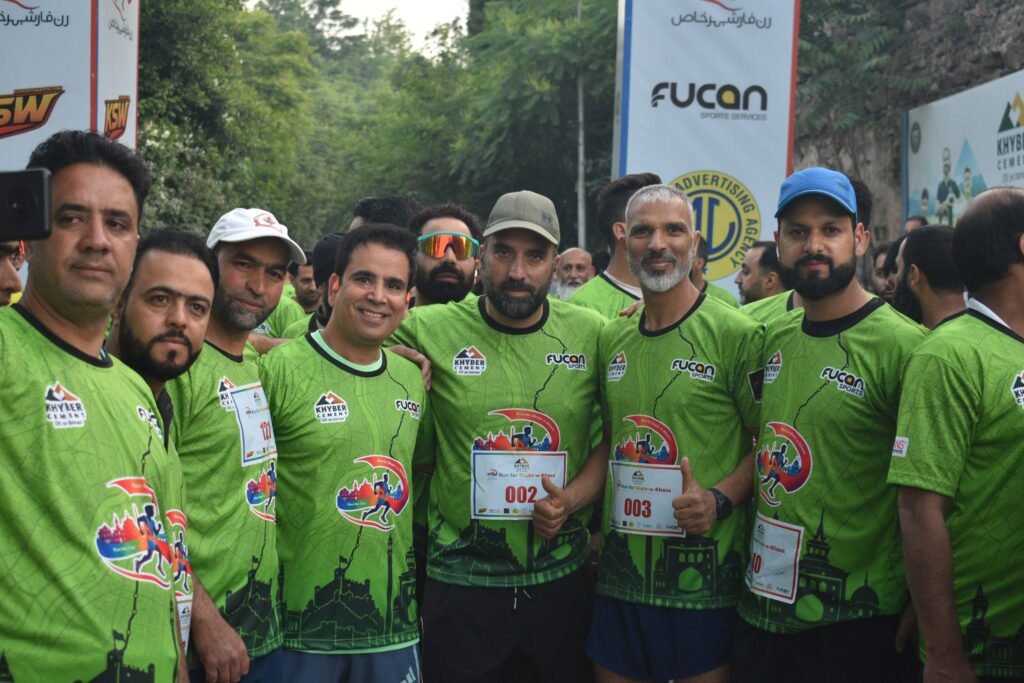
The change over the years has been remarkable.
Today, Kashmir has a growing network of running and fitness clubs, with participants from north, south and central Kashmir, including Srinagar. They come from different backgrounds and professions: young people and older adults, government employees, business owners, doctors, bureaucrats and people from ordinary working families.
They run early in the morning, train after work and make time for competitions despite their personal and professional commitments. Some focus on improving their timings, while others simply want to stay active and maintain a healthier lifestyle.
The calendar of running events has also expanded. Local events such as the Kashmir Marathon, Zoon Run, Wular Run and Shahrekhaas Run provide opportunities for runners to test themselves and connect with others. Many also travel to Jammu for night runs or head to Ladakh for running events. Others register for races in Delhi, Mumbai, Pune, Bengaluru and elsewhere in the country. Kashmiri runners have even begun exploring opportunities to compete internationally.
The most encouraging part is that many do not need a medal, prize money or official recognition to keep going.
They run because it makes them feel better. They run because they want to improve. They run because the community motivates them. And, increasingly, they encourage friends, colleagues and family members to join them.
This is the real strength of the movement. It is not built around one event or one individual. It is sustained by people who have made fitness a part of their lives.
The influence of a visible example
So, how much credit should Omar Abdullah receive for this growing culture?
It would be wrong to suggest that Kashmir’s running community began with him. The people I remember from Badamwari, along with countless others who trained and competed long before running became more visible, deserve recognition for keeping the spirit alive.
But there is an important difference between a community that exists and a community that captures the wider public imagination.
When a high-profile public figure participates seriously in an activity, it attracts attention. When that person returns, trains and improves, the example becomes more compelling. And when people see that the activity is not restricted to professionals or celebrities, they may begin to imagine themselves doing it, too.
Omar’s participation has helped provide that kind of visibility to running in Kashmir.
His performances have made people take notice, but the wider value lies in the conversations and actions that follow. Someone who had never considered running a half-marathon may decide to begin with a short daily run. A government employee may join a local fitness group. A young person may find a positive community through sport.
Such changes are not always measurable in headlines or race results. Yet they can be meaningful in everyday life.
For me, that is a more interesting measure of influence than political popularity.
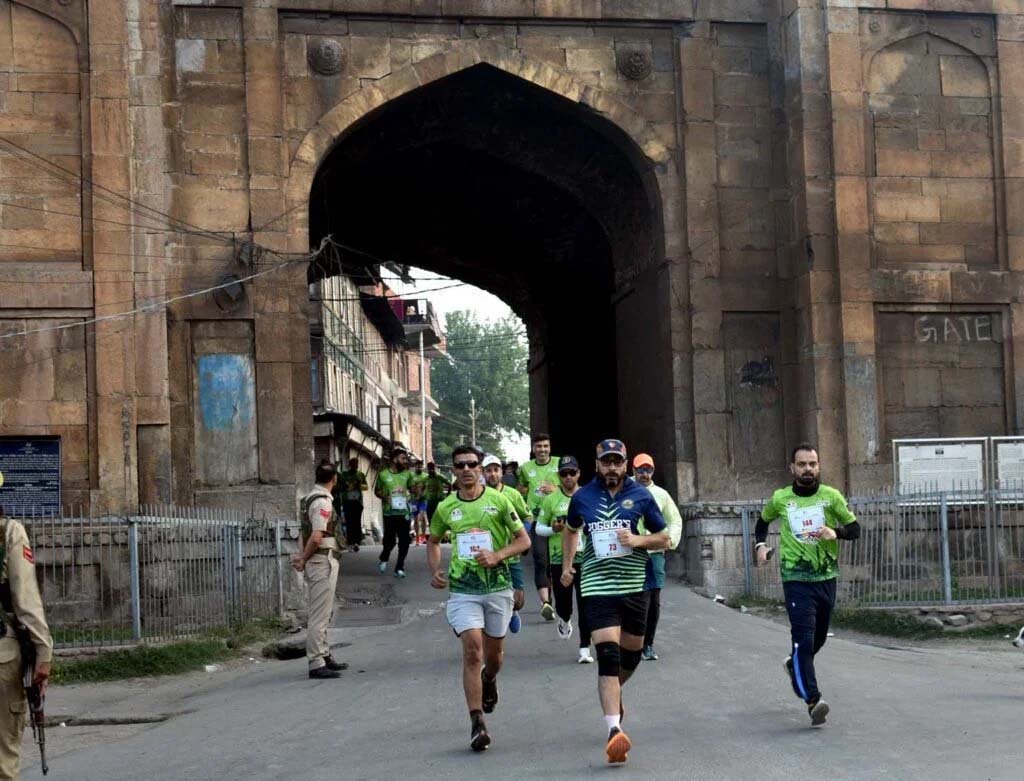
A community that is ready to respond
If anyone doubts how much the running culture has grown, there is a simple way to find out.
Announce a run at a particular place on a particular date and give the community reasonable notice. I believe that, even without elaborate arrangements, prizes or financial incentives, a sizeable group of runners would turn up from different parts of Kashmir simply to participate.
Bring together 200 runners for a community run, and you would see the enthusiasm for yourself.
They would not all arrive seeking certificates or trophies. Many would come for the experience, the companionship and the satisfaction of completing the distance.
That willingness to participate is an asset. It is also an opportunity for the administration, sports bodies and event organisers to build on what has already developed from the ground up.
A genuinely healthy Kashmir cannot be created through official announcements alone. It requires communities that take ownership of their own well-being. Kashmir’s runners are already demonstrating what that can look like.
Encouragement matters more than grand gestures
For all its enthusiasm, the running community still needs support. Much of its energy comes from volunteers and people who organise activities because they care about fitness. But enthusiasm can be undermined when events are disrupted, arrangements are changed at the last minute or organisers face unnecessary bureaucratic hurdles.
Support does not always have to mean financial assistance. It can mean access to suitable public spaces, timely permissions, basic safety arrangements, better coordination and recognition of the effort that goes into organising sporting events.
A simple interaction between Omar Abdullah and members of the running community could be a worthwhile step. A meet-and-greet would give runners an opportunity to share their experiences, discuss the challenges they face and suggest practical ways to encourage more people to take up fitness.
Who better to lead such an interaction than someone who understands, through personal experience, what training for a half-marathon involves?
He knows that crossing the finish line is only the visible end of a much longer process. Behind it are early mornings, tired legs, repeated training sessions, setbacks and the determination to keep going.
A little encouragement from the administration could help this community go a long way.
A step in the right direction: A dedicated category for J&K runners
Another encouraging development is the decision by the Directorate of Tourism Kashmir to introduce a dedicated category for Jammu and Kashmir runners in the 2026 Kashmir Marathon.
For local athletes, this is an important step. A separate category, with prizes specifically for J&K runners, can give them an additional incentive to prepare seriously and compete against one another for recognition.
The demand for such a category had been raised by local runners, who wanted a more defined opportunity to showcase their performances in an event that attracts wider attention.
Its inclusion in the 2026 edition is therefore welcome. It acknowledges the local running community and gives athletes another target to work towards.
The measure should not be seen as an end in itself. It can be the beginning of a broader effort to identify promising runners, encourage regular participation and create more opportunities for Kashmiri athletes to compete beyond the region.
With the right support, local events can become stepping stones towards bigger challenges.
What Kashmir’s runners have to say
The value of Omar Abdullah’s participation is perhaps best understood by speaking to the people who run themselves.
Muzamil Hussain Mir, one of Kashmir’s leading long-distance runners and the top Kashmiri finisher at the previous Kashmir Marathon, believes that seeing a high-profile person take running seriously can provide an additional push to other athletes.
“As a runner, I know how much effort it takes to prepare for long-distance events. It requires daily training, discipline and a proper routine. When you see a high-profile person like Omar Abdullah competing seriously and improving his personal best by such a margin, it gives you extra motivation to do better yourself. I definitely give him credit for motivating Kashmir’s fitness community,” Mir said.
Kashmir-based athlete and mountaineer Zahid Kota also sees value in the example set by people who make time for physical activity despite demanding professional lives.
“Beyond politics, it is definitely motivating to see someone like Omar Abdullah doing what he is doing. He has faced criticism from political rivals for these activities, but it takes considerable effort to achieve what he has managed over the last few years. I started exploring the mountains and running regularly relatively late myself, so I can relate to the challenge. The improvement in his timings in just one year is extraordinary. Examples like this help keep our community motivated,” Kota said.
For runners who know the discipline required to prepare for a 21-kilometre race, these improvements mean more than a photograph at a finish line. They represent the work that goes into becoming a better runner.
My personal take: Facts should rise above political loyalties
Let me make one thing clear before someone decides to label me an Omar Abdullah supporter or an NC sympathiser.
My political background and affiliations are far removed from the National Conference. I come from a social and political milieu that has historically stood in opposition to the NC, and my own upbringing has been influenced by a different political environment. I have no reason to defend Omar Abdullah for political reasons.
But facts are facts, and as a journalist, I believe they should be acknowledged regardless of personal or political preferences.
It is possible to disagree with a politician on many issues and still recognise a positive contribution in a particular field. The two are not mutually exclusive.
I have seen something similar in the sports administration of Jammu and Kashmir. When former sports administrator and PDP leader Waheed-ur-Rehman Para took over as Secretary of the J&K Sports Council, his tenure brought a different level of attention to sports administration. Nuzhat Gul also played a significant role in shaping the Council’s work during her tenure.
One does not have to agree with every decision made by a public figure to acknowledge the changes associated with that person’s work. Leadership, when exercised effectively, can give an existing movement momentum and bring attention to areas that might otherwise be neglected.
The same principle applies here.
Omar Abdullah may have taken up running for his own health and personal satisfaction. That is his choice, and there is nothing wrong with it. But his participation has also had a wider effect by making the activity more visible and encouraging others to take it seriously.
That indirect influence is worth recognising.
More than a marathon
Ultimately, this is not just about Omar Abdullah’s finishing times or the number of marathons he enters. It is about the culture that can grow when people see fitness as a normal, achievable part of life.
Kashmir already has the people, the enthusiasm and the natural landscape to build a much stronger running culture. What it needs is continued participation, safe opportunities, better coordination and institutional encouragement that respects the community’s independence.
Omar’s example has helped bring attention to that possibility. The next step is to ensure that the momentum extends beyond one public figure and becomes a lasting part of everyday life in Kashmir.
The real victory will not be measured by who finishes first or who records the fastest time. It will be measured by how many people take their first steps towards a healthier life, how many young people find a positive outlet through sport and how many communities discover the strength of doing something together.
Sometimes, a run changes more than the runner.
And sometimes, the most important thing a public figure can do is not deliver another speech, but lead by example—one step at a time.