
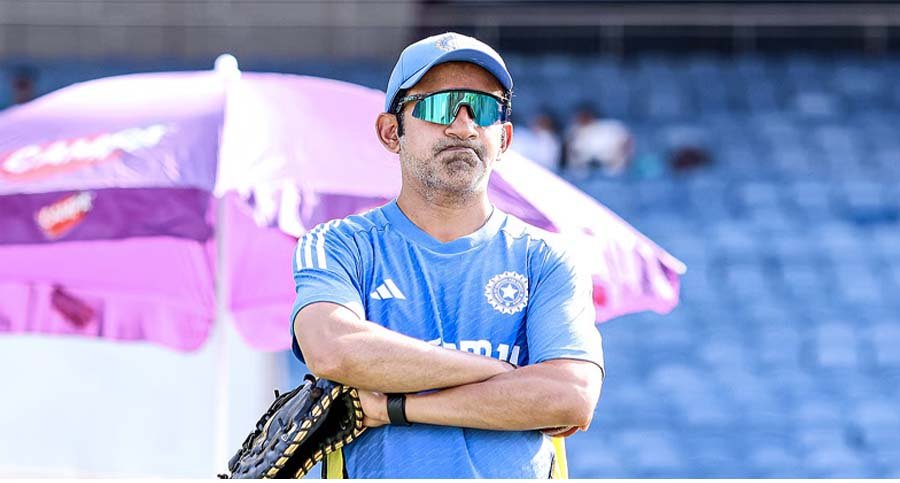

Guwahati: India head coach Gautam Gambhir has called for a greater contest between bat and ball after India completed a record 406-run chase against the West Indies in the second ODI in Guwahati.
India chased down the imposing target in emphatic fashion, but Gambhir said the nature of the pitch left little for the bowlers to work with and made the contest heavily weighted in favour of the batters.
Speaking after the match, Gambhir said conditions that allow teams to score more than 400 runs and successfully chase such a total do not provide enough opportunities for bowlers to influence the game.
“There has to be a bit more contest between bat and ball,” Gambhir said. “This is not cricket, this is only batting.”
The India coach acknowledged that the high-scoring contest was entertaining for spectators and beneficial for broadcasters and record books. However, he argued that the interests of bowlers also needed to be considered when pitches were prepared.
According to Gambhir, young bowlers can find themselves unfairly judged when playing on surfaces offering almost no assistance.
Gambhir asks for greater support for bowlers
Gambhir also urged the coaching staff and selectors to assess bowlers on the quality of their execution rather than simply looking at their final figures.
He pointed out that modern ODI cricket already gives batters considerable advantages, including fielding restrictions, two new balls and increasingly aggressive batting.
In such circumstances, he said bowlers have limited room for error and should be given some margin when their figures look expensive.
“The first thing you look at is whether they were able to execute their bowling or their plans properly,” Gambhir said, stressing that poor figures do not always mean a bowler has performed badly.
He specifically referred to Auqib Nabi, who made his India ODI debut in the match, as an example of a young bowler who needs support and opportunities to develop.
Gambhir said coaches cannot simply judge inexperienced bowlers by their analysis figures, particularly when conditions offer very little assistance.
India have limited time before 2027 World Cup
Gambhir also highlighted the limited number of ODIs India have available to finalise their squad and combinations ahead of the 2027 ODI World Cup.
Although roughly a year remains before the tournament, he pointed out that the IPL and India’s bilateral commitments will significantly reduce the number of matches available for experimentation.
India will have only around 20 ODIs after the current series, according to Gambhir, including limited-overs matches against Sri Lanka and Zimbabwe.
He said India therefore need to use the upcoming matches to test different players and combinations rather than waiting until the final stages of their preparations.
Gambhir indicated that the period leading up to the Zimbabwe series would be particularly important for assessing India’s wider pool of ODI options.
Pressure is part of World Cup preparation
Gambhir also explained why India handed Nabi his debut while the team already led the series 1-0, rather than waiting for a potential dead rubber.
He said playing a debutant in a match where the series was still at stake provided a more realistic test of how the player handles pressure.
According to Gambhir, the pressure experienced in international cricket needs to replicate the demands of a World Cup, where mistakes can have significantly greater consequences.
He also cited Gurnoor Brar as another player who could benefit from being exposed to difficult situations, including bowling during the powerplay and at the death.
Gambhir acknowledged that such opportunities could result in expensive figures, but argued that learning to operate under pressure would be more valuable to India’s long-term plans than protecting a bowler’s statistics.
With the 2027 World Cup approaching, India now face the challenge of balancing results with experimentation as they look to build a settled ODI squad.
For Gambhir, that process includes not only finding the right batting combinations but also developing a bowling group capable of performing when the conditions are less favourable.